

Articles

Unleashing Business Potential—With Japan Study Tours
Immerse yourself in Japanese culture while mastering operational excellence.
The most pivotal element in Lean business management often comes as a query, and my answer remains constant – the team culture holds the utmost significance.
Just like many others, you may have witnessed instances where investments are made into advanced tools, techniques, and innovative technology, but the anticipated outcomes don’t materialise. This is usually due to the lack of a positive team attitude which often results in a stagnation of progress.
Transformative Leadership Development: Japan Study Tours
Study tours serve as an effective medium for catalysing a shift in perspectives and aligning them with an organisation’s core values. Unifying a team’s viewpoint becomes a herculean task when there’s a lack of congruence in leadership. Robust leadership nurtures people’s dedication, making them eager to deliver their best for their customers, teammates, and the business itself.
A Shift in the Japanese Harmony Culture: Personal Sacrifice to Proactive Improvement
Historically, these values have often led individuals to overlook problems and understate issues that perhaps needed more attention – a challenge prevalent in many cultures, including Australia. However, a radical shift has been witnessed in the business culture of certain Japanese firms regarding the concept of harmony.
Contrary to the previous belief of not stirring up issues, now, if you withhold problems or fail to visualise them, it is perceived as a disruption to the company’s harmony. This transformation in understanding harmony – from ‘avoid creating disruption’ to ‘promptly address issues for improvement’ – drives individuals to focus on enhancement rather than dismissing the elements hindering business growth.
Adopting Operational Excellence: Insights from Japanese Businesses
Many participants in these study tours experience a paradigm shift in their mindset. This transformation permeates their professional lives, inducing a significant alteration in their leadership approach. Participants return from these tours invigorated, equipped with a fresh perspective on their roles.
When a team from a single business embarks on this transformative journey together, the shared experience influences a strategic shift towards a focus on continual improvement upon return. For instance, one team revamped its Key Performance Indicators (KPIs) to bolster value stream improvement and reduce the prevalence of siloed operations. They implemented team huddles to facilitate smoother information flow, enabling more effective project management.
Another group entirely revised their existing information cascade within the organisation, both in communication and information presentation during team meetings. They recognised the importance of upward KPI reporting and the role of strategic and customer feedback from upper management in motivating teams. This two-way communication within the organisation expedited improvement implementations.
These are merely glimpses of the transformation that occurs post these study tours. The direct impact of such experiences on business improvement is indeed invigorating.
Regards,
Taylor.
Read More: Japan Lean Business Tours
Reach out if you want to know more about how to create a culture of continuous environment in your workplace.

Are You a Business Leader Who is an Exception to the Rule?
Leadership isn't about grand gestures; it's about consistently aligning systems, symbols, and behaviours to foster a culture where every team member understands their role, receives constructive feedback, and envisions a future within the organisation.
As a business leader, one of your key responsibilities is to create a productive culture within your organisation. However, this is often easier said than done. In a recent conversation with Makoto, Chris Goddard discussed the challenges of addressing negative organisational culture and why leaders should invest in making changes.
Creating a Positive Culture
According to Goddard, the purpose of leadership is to create a productive culture. But, in his experience, this is the exception rather than the rule. Many businesses struggle with cultural and productivity issues, and leaders often fail to provide their team members with clear expectations and feedback.
As a leader, your team members have three fundamental questions: What is my job? How am I doing in my job? And what is my future with the company? If you fail to provide clear answers to these questions, you risk creating a culture of confusion and dissatisfaction.
Creating a productive culture
Goddard emphasised that building a productive culture is not rocket science. It requires three key tools: systems, symbols, and behaviours. Systems refer to the processes and procedures that govern how work is done. Symbols are the visual cues that communicate the company’s values and culture. Behaviours are the actions and attitudes that employees are expected to demonstrate in the workplace.
To create a productive culture, leaders must eliminate counterproductive behaviours and help team members become more productive. This requires a deep understanding of the company’s culture and a willingness to make changes where necessary.
Culture developed in consultation
While leaders can turn to consultants for support, Goddard stresses that changing the culture is ultimately the leader’s responsibility. However, consultants can provide valuable insights and perspectives that may not be immediately apparent to the leader.
Creating a productive culture is essential for any business looking to succeed in today’s competitive market. Leaders must be willing to invest time and effort into building a culture that promotes productivity, clarity, and satisfaction. By focusing on systems, symbols, and behaviours, and seeking support where necessary, leaders can create a work environment that supports their team members and their company’s success.
About Chris Goddard
Holding an Engineering Degree focused on engineering, management and process control, Chris Goddard has led or supported large scale sustainable operational & commercial transformations in Australia & New Zealand over the past two decades.
His formidable resume encompasses a career in various transformational, commercial and business improvement roles with the likes of NZAS, Boyne Smelters, Comalco Aluminium Limited and Rio Tinto.
Chris now enjoys a more relaxed pace with his wife Donna in Otago, where together as Black Swan Consultancy New Zealand they provide support to various SME and local community in core skills including lifting leadership capability, risk management, managing external stakeholders & business transformation.
Regards,
Taylor.
Check out our Capability Training options.
Reach out if you want to know more about how to create a culture of continuous environment in your workplace.
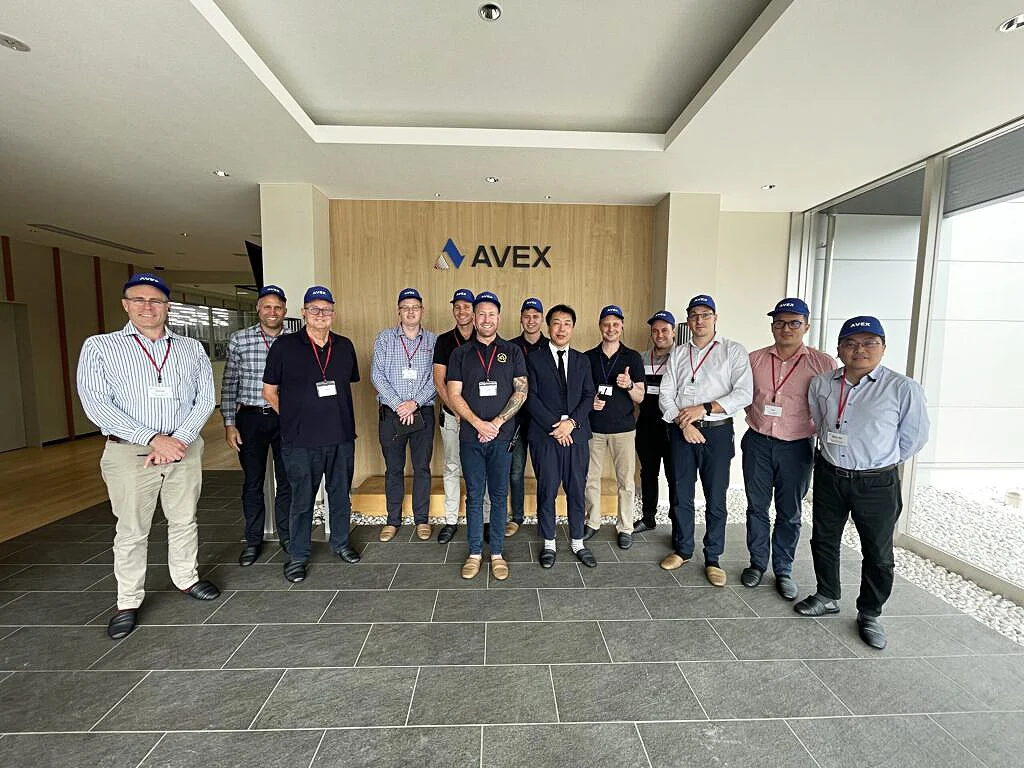
Key Insights From Our Latest JLE Study Tour Participants
A transformative journey into Lean and Kaizen methodologies, offering business leaders fresh insights to drive cultural and operational excellence.
Through the Makoto lens, we recently had the opportunity to take another group of enthusiastic business leaders on a Lean Experience Study Tour in Japan. This immersive journey into the heart of Lean and Kaizen methodologies is always an eye-opening experience for participants.
Let’s delve into some of the key changes our latest group is eager to bring back to their respective workplaces, the challenges they foresee, and how they plan to tackle them.
Embracing a United Vision and Purpose
First on their list is to instigate a complete vision and purpose workshop with their management teams. Many see the existing culture as a potential obstacle to achieving this. The solution lies in uniting the directors or executives in agreement on the significance of vision and purpose as essential drivers for strategic alignment. It will be crucial for leadership to come together, understand the importance of unity, and promote a shared vision to their teams.
Championing 5S in Manufacturing and Inventory
Next, participants aim to implement the 5S methodology in their manufacturing and inventory processes. Change resistance in long-standing employees could pose a challenge. Overcoming this will require providing the team with a Kaizen roadmap and an understanding of ‘why’ these changes are essential. Additionally, they acknowledge the need for data accessibility and intelligence to understand the new normal. The key lies in implementing effective training to manage and display business intelligence information.
Standardising 3S Rosters and Audits
The group recognises the need to introduce 3S rosters, audits, and standard work to promote 3S culture (introducing Standardise and Sustain). The challenge lies in a lack of perceived value and enjoyment in these tasks. The resolution? Leadership must lead by example and involve front-line employees in the implementation of improvements, particularly around standard work and 3S controls.
Venturing into QR codes for standard work
As part of their digital transformation initiatives, participants are enthusiastic to experiment with implementing QR codes for viewing standard work, particularly standard work videos. This is a new venture for many, but they plan to address any uncertainty by explaining the reasons behind the implementation and piloting the technology in areas more open to change, proving the value of this initiative.
Prioritising Gemba walk procedures
The tour participants also aim to revise and reinforce the Gemba walk procedure. With initial resistance to added administrative tasks, they recognise the importance of aligning KPIs for safety and improvement ideas with Gemba walks, thereby eliminating waste. The key is to present these facets together, facilitating an understanding of their collective importance.
Reinventing Employee Onboarding
The group aims to enhance the onboarding process for new employees. They intend to focus on understanding an individual’s perception of their role and how they can contribute and foster improvement. The challenge lies in potential resistance from existing employees, as this has not been an approach previously. The way forward is to open the same discussion lines with the current team, fostering inclusivity.
Re-evaluating Vusiness Strategy
Lastly, the group acknowledged that business strategy often leans heavily on results like profit and growth, and not on how to get there. However, they see the value in incorporating aspects like training and development, continuous improvement through the elimination of waste, workplace organisation, and standard procedures into their strategic approach. Although this holistic view may not be well-understood currently, they are committed to ensuring their boards and executive teams gain a deep understanding of continuous improvement and how to foster a culture that supports it.
On Reflection…
As we reflect on these points, it is clear our latest JLE tour participants are returning to their businesses with fresh insights and a new strategic direction. Japan’s Lean methodologies have once again inspired, motivated, and enlightened business leaders to embark on their transformational journeys. At Makoto, we are proud to be part of their journey and excited to see how these changes will positively impact their organisations in the months to come.
Like to know more? Contact us today.
Respect,
Daniel